If you’re managing a growing South African business, you’ve likely felt the weight of the traditional annual performance review. You know the drill: a frantic scramble to compile metrics, a tense one-hour meeting, and a stack of paperwork that immediately gets filed away. The result? Little real growth, a lot of resentment, and a system that feels like administrative control rather than actual people development.
The world of work, especially in a dynamic and competitive market like South Africa, demands more. The good news is that top-tier organisations are undergoing a profound shift. They are moving away from performance management as a bureaucratic control mechanism and embracing it as a powerful, ongoing opportunity for collaboration.
This shift isn’t just about making people feel better; it’s about business intelligence, strategic alignment, and ultimately, building a more resilient and high-performing company. For companies striving for excellence and seeking to optimise their B-BBEE scorecard, this modern approach is non-negotiable.
The Paradigm Shift: Moving from Control to Performance Management to Collaboration
The key difference between the old way and the new is simple: intent.
Traditional performance management is backwards-looking. It’s a mechanism of judgement—a post-mortem of what went right or wrong in the last year, often tied directly to compensation. This structure encourages employees to look busy and hide mistakes, stifling innovation and honest dialogue.
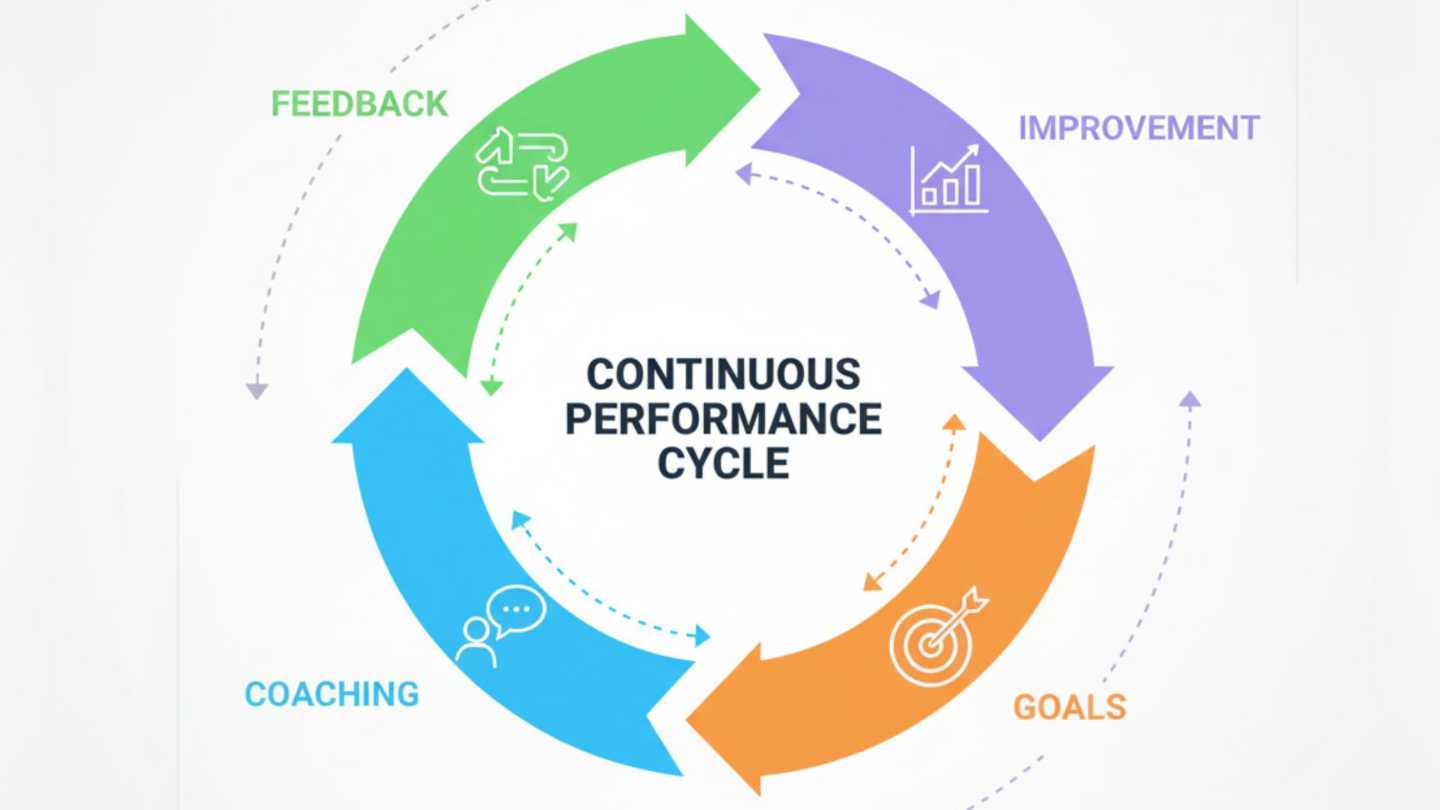
Modern Performance Management to Collaboration is forward-looking. It’s a continuous, dynamic cycle of coaching, goal-setting, and two-way feedback. This fosters a culture of shared accountability and growth, where managers act as coaches and employees feel empowered to drive their own success. It is, fundamentally, a human-centred approach that recognises the value of every individual’s contribution.
Embracing Continuous Performance Management
The concept of Continuous Performance Management replaces the dreaded annual review with regular, informal check-ins. These aren’t formal evaluations; they are short, focused conversations designed to address three things:
- Alignment: Are the individual’s tasks still contributing to the company’s immediate strategic goals?
- Obstacles: What is currently blocking the employee’s progress, and how can the manager help remove it?
- Development: What skills should the employee be focusing on for future growth?
By making these discussions standard practice—weekly or bi-weekly—you ensure that minor issues never become major problems, and that employees always know where they stand and what their next steps should be.

The Pillars of True Empowerment in Performance Management
The goal is to shift the balance of power, not to eliminate accountability. This is where Empowerment in performance management becomes critical. When employees are given the tools, autonomy, and voice to steer their roles, performance naturally improves.
True empowerment rests on three pillars:
- Transparency and Clarity: Goals must be clear, measurable, and understood. When an employee knows why their work matters, they stop just completing tasks and start achieving objectives.
- Two-Way Feedback: Performance management should be a dialogue, not a monologue. Managers must be open to feedback on their own coaching style, the clarity of their directives, and the support they provide.
- Coaching Over Critiquing: Managers need training to move from being an ‘evaluator’ to being a ‘coach’. A coach asks questions, guides the development path, and unlocks potential. They focus on behaviour and impact rather than personality and fault.
Feature | Traditional Performance Management | Continuous, Collaborative Management |
Frequency | Annual or semi-annual | Weekly or bi-weekly check-ins |
Focus | Past performance and forced ranking | Future growth, real-time coaching, and development |
Feedback Flow | Top-down (Manager to Employee) | Two-way (Dialogue and peer feedback) |
Goal Setting | Static, set at the beginning of the year | Dynamic, adapted as business needs change |
Outcome | Compensation, paper trail, dread | Engagement, productivity, talent retention |
Beyond HR: Performance as a Strategic B-BBEE Driver
For South African businesses, optimising internal performance isn’t just about profit; it’s a strategic B-BBEE imperative. An engaged and highly skilled workforce directly impacts critical B-BBEE Scorecard elements:
- Skills Development: The continuous feedback loop identifies skills gaps immediately, allowing for targeted training and mentorship that accrues B-BBEE points efficiently.
- Management Control: By fostering a culture of empowerment and development, you naturally build a strong pipeline of skilled management, supporting transformation targets.
- Enterprise and Supplier Development: High-performing employees are better equipped to mentor and support the growth of smaller, emerging businesses in your value chain, strengthening your ESD contributions.
By adopting a performance model based on Performance Management to Collaboration, you are making a commitment to your people, which translates directly into better business outcomes and a robust, compliant B-BBEE scorecard.
Making the Transition: Your First Steps
Transforming your performance system is a journey, not a switch. It requires a mindset shift from leadership down. Here are two practical first steps:
- Train Your Managers to Coach: Stop expecting managers to be HR experts and start training them to be effective coaches. They need scripts, practice, and confidence in having tough, honest, and productive conversations.
- Start Small with ‘Stay Interviews’: Instead of exit interviews, implement ‘stay interviews’—informal check-ins where you ask high-performing employees what keeps them engaged and what challenges they face. This provides immediate, valuable insight into what is truly empowering them.
If your current B-BBEE strategy is not translating into genuine internal growth, your performance management system is likely the missing link. When employees are strategically aligned and deeply engaged, your B-BBEE efforts become an authentic reflection of a successful, transformed enterprise.
We recommend reading our related articles on Customised Skills Development Strategies for more details on how performance identification links to B-BBEE Scorecard success.
Conclusion: A Collaborative Future
The move from performance control to collaboration is an investment. It’s an investment in your people, your future agility, and your overall success in the South African market. This modern approach ensures that every conversation, every goal, and every piece of feedback is pointed directly towards growth, both for the individual and the business.
Ready to align your people strategy with your strategic B-BBEE goals?
Take the Next Step: Customised Strategic Solutions
At BE Empowering, we understand that B-BBEE compliance is more than just a regulatory checklist—it’s a powerful tool for transformation and sustainable growth. Our experts specialise in building customised strategies that integrate HR, skills development, and enterprise growth, ensuring your performance culture directly fuels your B-BBEE scorecard success.
Don’t let outdated control mechanisms hold your business back.
Contact BE Empowering today to explore how our customised B-BBEE solutions can transform your management practices into a collaborative engine for market leadership.